
We are Gasunie
We are Gasunie
Gasunie is an energy infrastructure company. In the Netherlands and the northern part of Germany, we operate and maintain networks, terminals and storage facilities for gas. Now, this is mainly natural gas, but the energy transition will mean a gradual shift towards biomethane and hydrogen. We also collaborate in the construction and management of heat and CO2 infrastructure. We ensure that this segment of the energy supply is safe, affordable and as sustainable as possible, ensuring that everyone has access to energy, always.
The Dutch State is our sole shareholder. Our employees are spread over more than 30 locations in the Netherlands and northern Germany. Our headquarters are in Groningen (the Netherlands), and our main German office is located in Hanover.
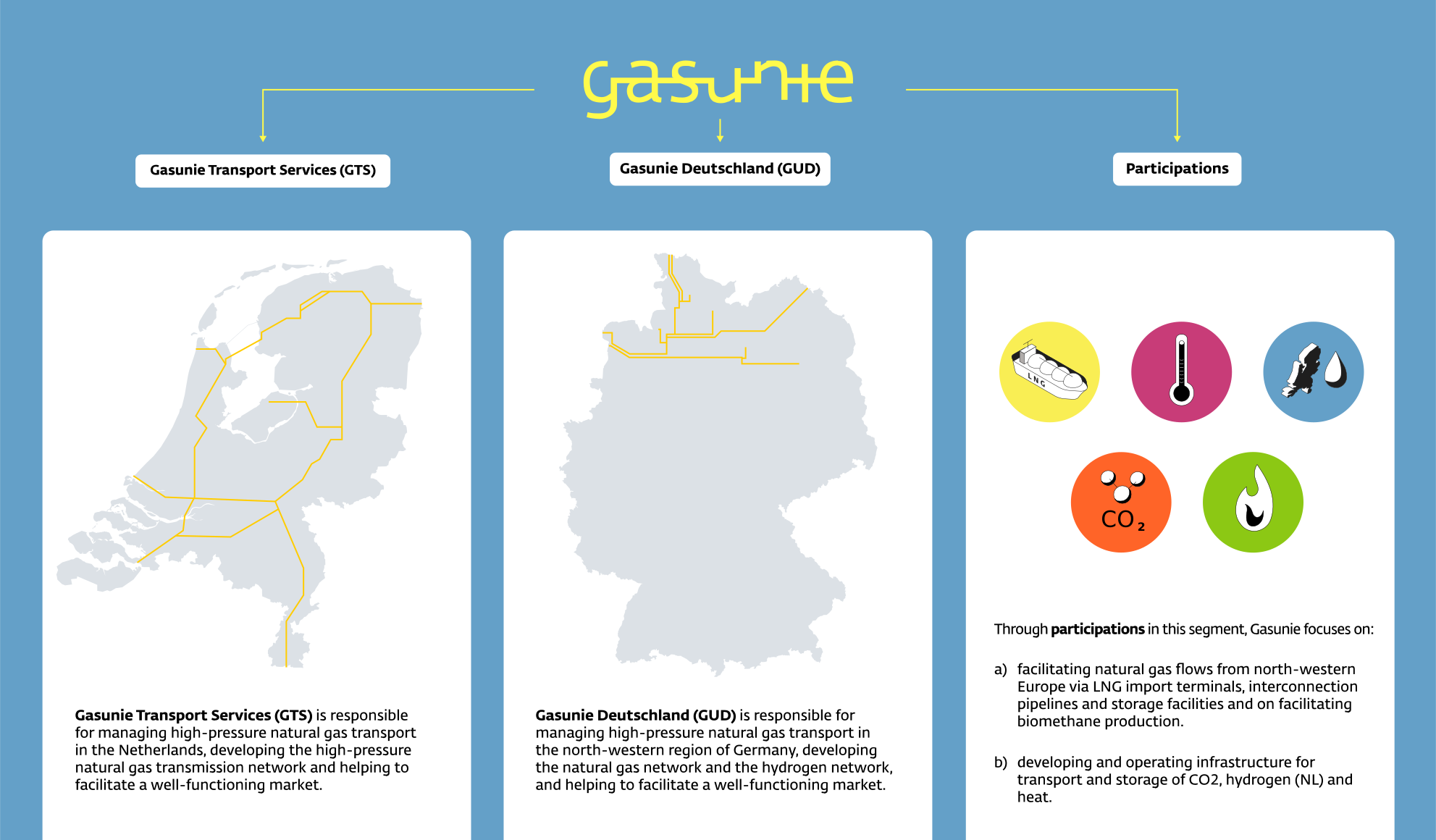
GTS and GUD give the market access to the available capacity on their networks. Customers feed gas in at entry points and take gas off from the network at exit points. To be able to do that, they sign contracts to reserve capacity at specific points of the network over a specific period (year, quarter, month or day).
GTS’s and GUD’s natural gas transmission operations are revenue-regulated, meaning that the regulatory authorities Netherlands Authority for Consumers and Markets (ACM) and Bundesnetzagentur (BNetzA) determine how much these companies may earn each year and the conditions they must apply for their customers. If either of these companies earn less than the amount previously set by the relevant authority, they may increase their tariffs in subsequent years; if they earn more, the additional revenue is returned to the market in the form of lower tariffs in subsequent years.
For the revenue and results of each segment, see note 2 to the financial statements.
| In millions of euros | GTS | GUD | Participations |
|---|---|---|---|
| Asset value at the end of 2025 | 6,422 | 2,106 | 2,479 |
| Revenue for the financial year 2025 | 995 | 383 | 279 |
Value chains
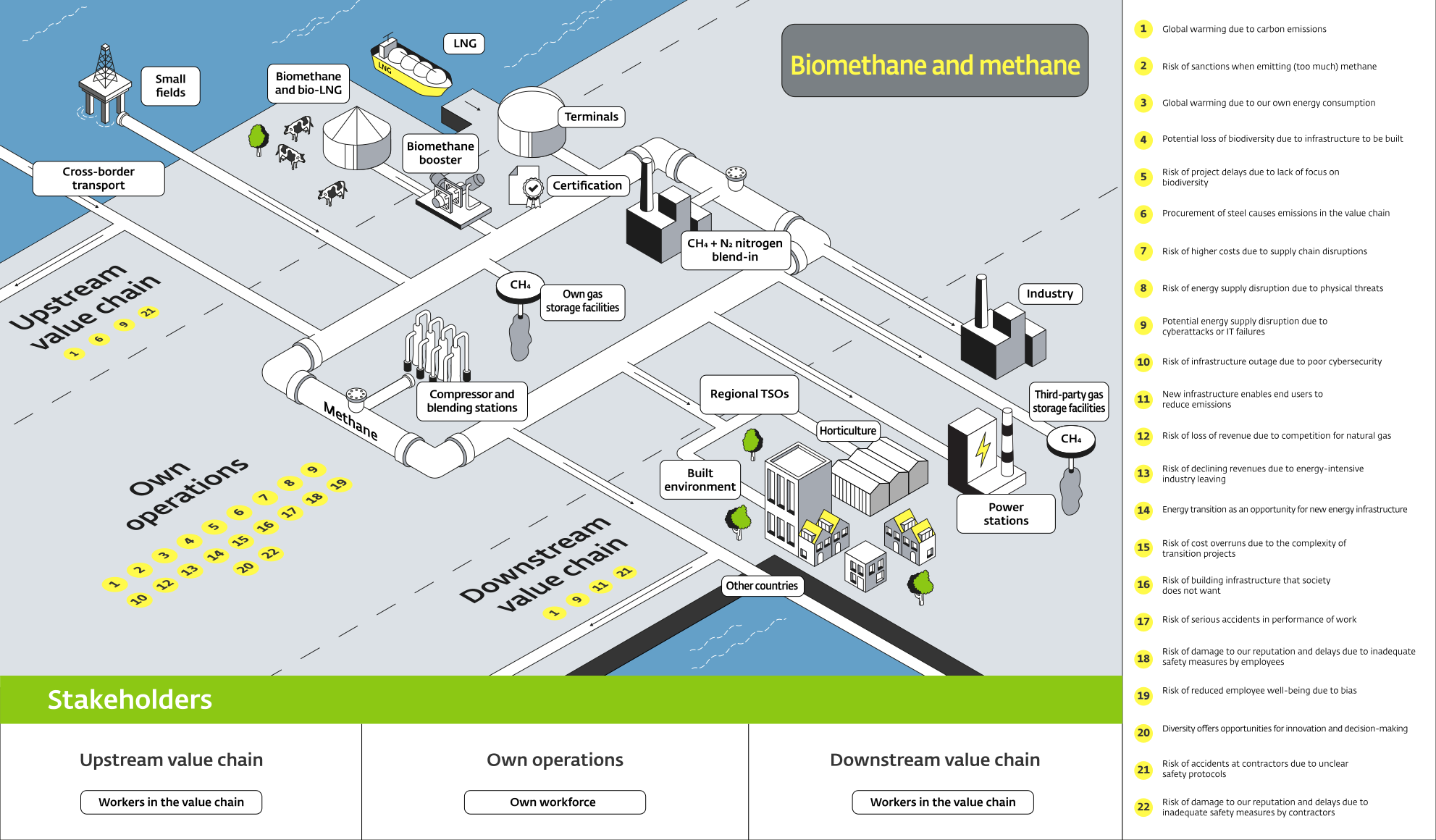
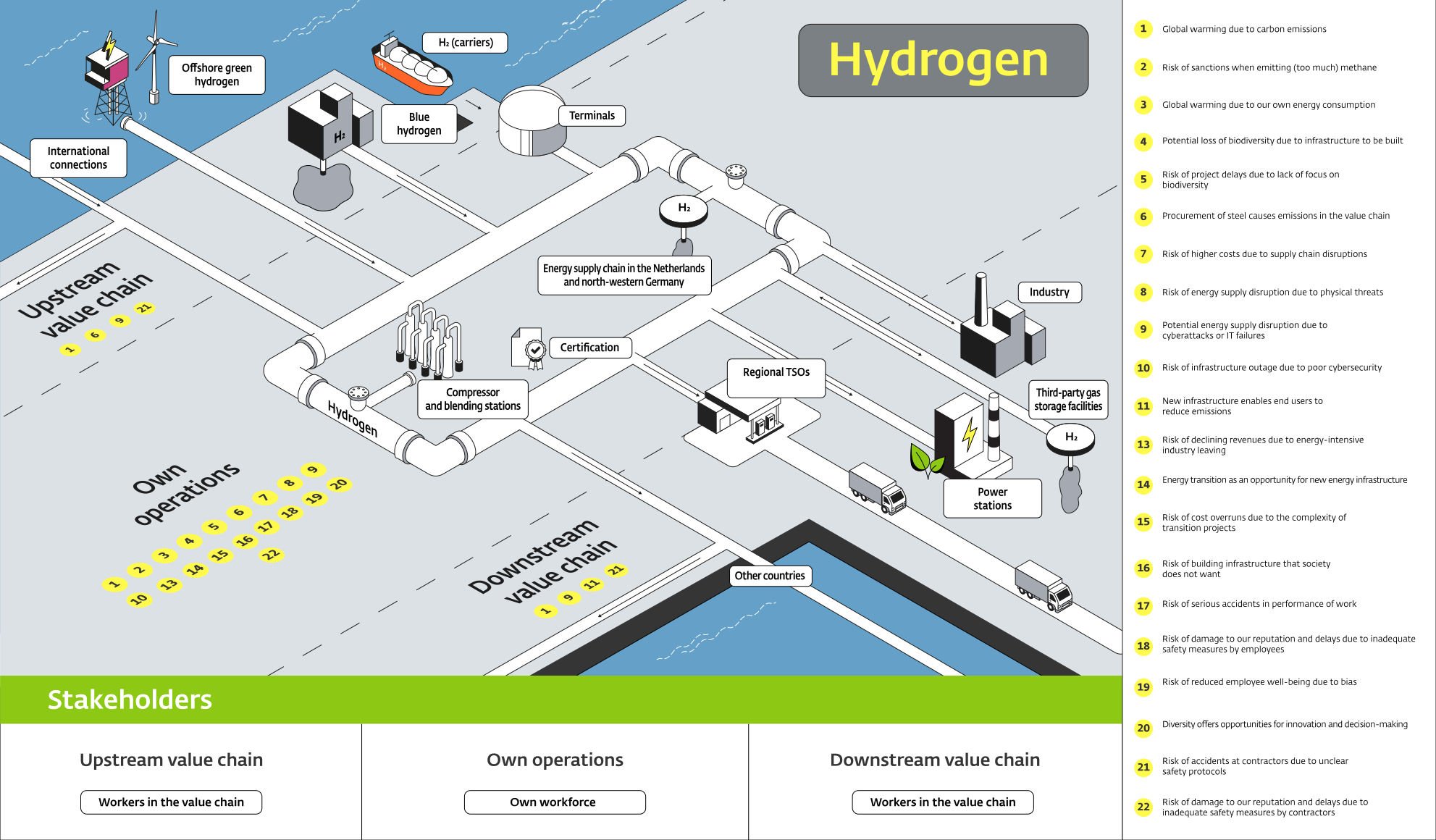
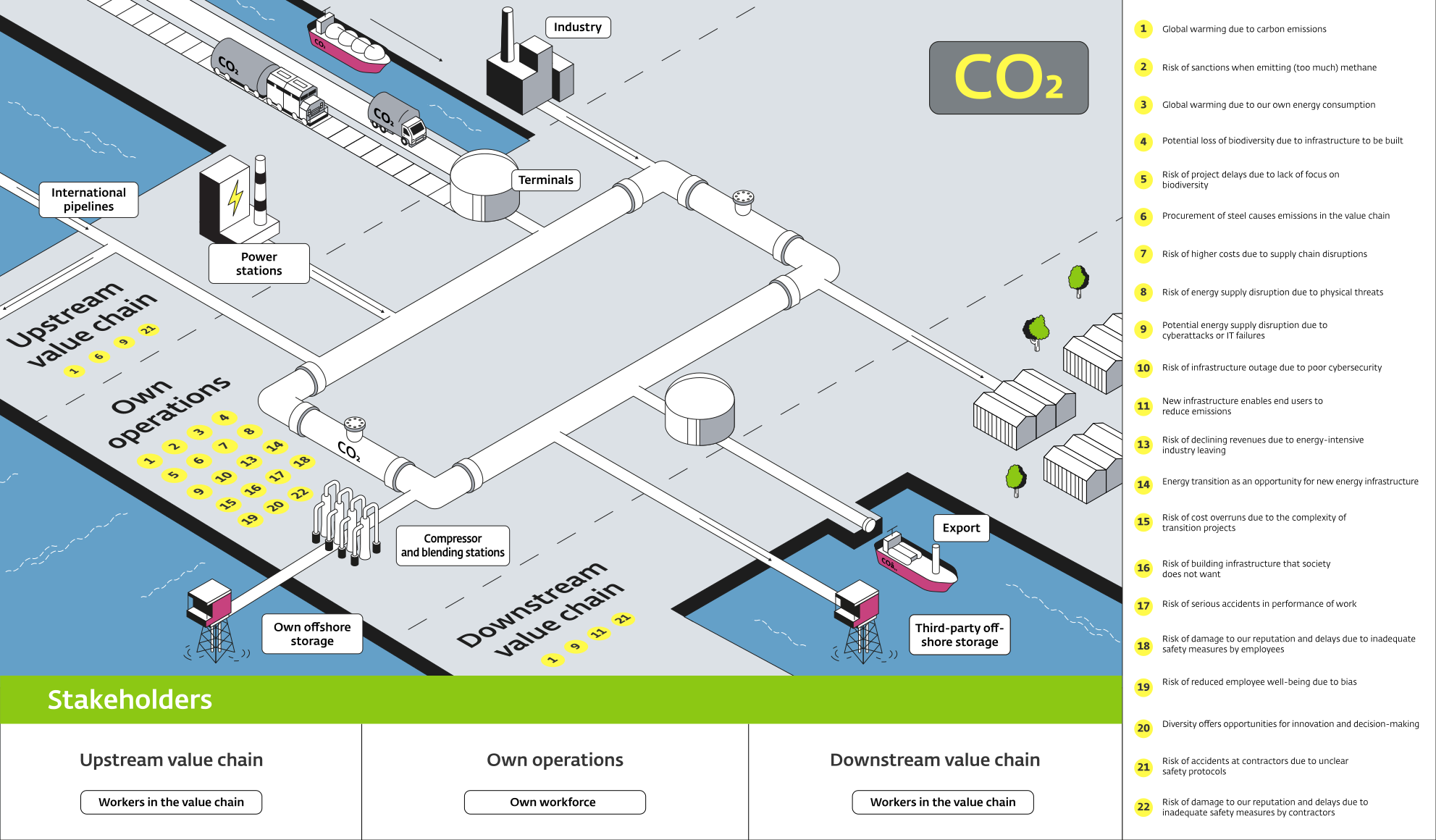
In 2025, Gasunie operated in two value chains: the methane (biomethane and natural gas) and hydrogen value chains.1 Over the coming years, we will complete a large number of major energy transition projects that will see us branch out into two new value chains: the CO2 and heat transport and storage value chains.
1 Gasunie subsidiary Hynetwork operates a hydrogen pipeline in the province of Zeeland that is already operational.
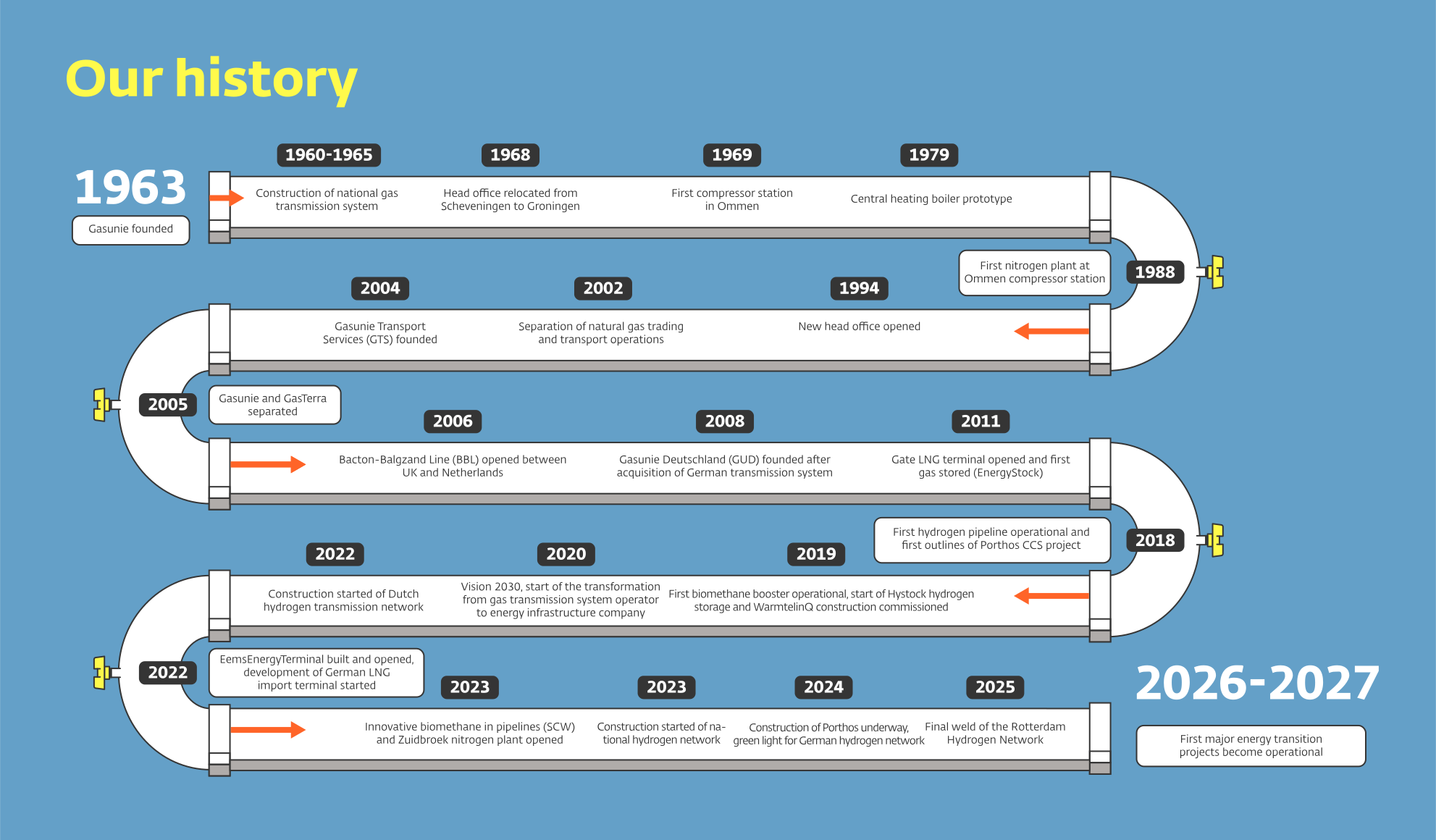
History
Strategy 2030, heading towards Vision 2040
As Gasunie, we want to be ready for the future we envisage. We have to be, given our great social responsibility when it comes to the energy supply in the Netherlands and north-western Germany. In 2024, we set out a new group strategy for the years between then and 2030, which we started executing in 2025.
Gasunie is navigating a period of profound change. Although the use of natural gas will decline over the next ten years compared to today’s levels, it will remain an important energy source. Following the closure of the Groningen gas field, the Netherlands has become an importer of natural gas after decades of exports. The war in Ukraine has led to uncertainty about security of supply in our market areas (the Netherlands and Germany), which has prompted us to initiate new large-scale construction projects for natural gas infrastructure, such as pipelines and terminals.
EU and Dutch climate targets are under pressure due to high energy costs, rising interest rates, investment uncertainty and project delays, and the focus is increasingly on affordability, competitiveness and physical and digital resilience. As a company, we are increasingly looking beyond our own walls, looking at the needs of our customers on the market and at other parties in the energy system of tomorrow. At the same time, we are increasingly taking a cross-departmental and cross-specialism perspective inside our company. We are doing this because changing and more complex value chains demand new ways of thinking and working together.
With our Strategy 2030, we are taking ambitious, concrete steps towards realising our Vision 2040. Our energy infrastructure brings together natural gas, hydrogen, CO2, heat and biomethane, and contributes to an integrated system for new energy. Working safely comes first and foremost in everything we do. We also strive for healthy financial operations. And as a state-owned company, we perform our work with a clear goal in mind: to serve the public interest.
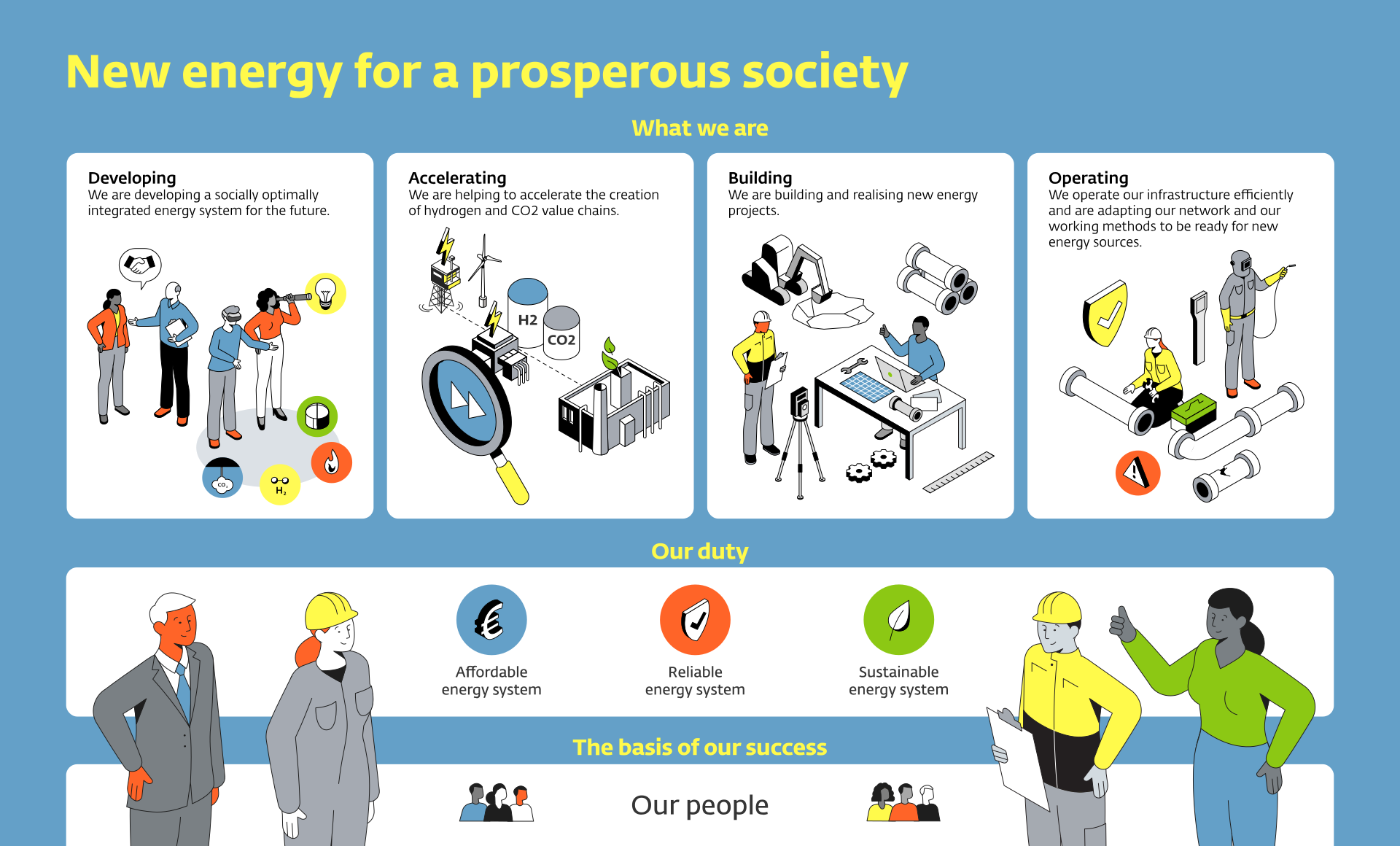
Our success is driven by our employees. Gasunie has much to be proud of. We have high-quality technical expertise in house, an excellent reputation when it comes to reliability, and excellent working conditions. We are developing quickly, becoming ever more multifaceted and taking the lead in the energy transition. To successfully implement our strategy, our people need to respond flexibly to external developments, changing policy rules, new technologies and currently unforeseen market conditions.
We manage large, complex projects and create social value. We are promoting a corporate culture that is in step with our new challenges and responsibilities, and shaping an organisational structure in line with this. We want to remain an attractive employer in this tight labour market. This is how we are building together to shape a new, exciting, challenging chapter in Gasunie’s wonderful history.
Vision for 2040
By 2040, the outlines of the energy transition will have become clear and greenhouse gas emissions across Europe will have been brought down by a massive 90%. Fossil fuels will have partly been replaced by a mix of renewable sources, such as solar, wind, heat and biomethane, supplemented with nuclear energy and energy carriers such as hydrogen.
By 2040, electricity could potentially cover as much as 40% of the total energy demand, compared to 20% in 2025. Natural gas is the flexible energy buffer in our power supply. While hydrogen as an energy carrier has seen a slower start than expected, we expect blue hydrogen to be a viable and widely available alternative by 2040.
Sustainable gases will have become important resources for industries where full electrification is not feasible and industries for which, while they do have the option to go electric, molecules are the better solution because they involve the lowest cost to society. Choosing molecules avoids things such as hybrid heat pumps having to be installed in the built environment. Additionally, sustainable gases can be used to cover peak demand for electricity and heat.
By 2040, Gasunie will have become a leading operator of large-scale molecule transport, storage and import infrastructure. We will be operating an integrated energy system where supply and demand are balanced, and we will be doing so at the lowest possible cost for society. Together with partners such as TenneT and regional network operators, we will be helping to ensure a robust, sustainable energy system that supports economic activity and guarantees security of supply.
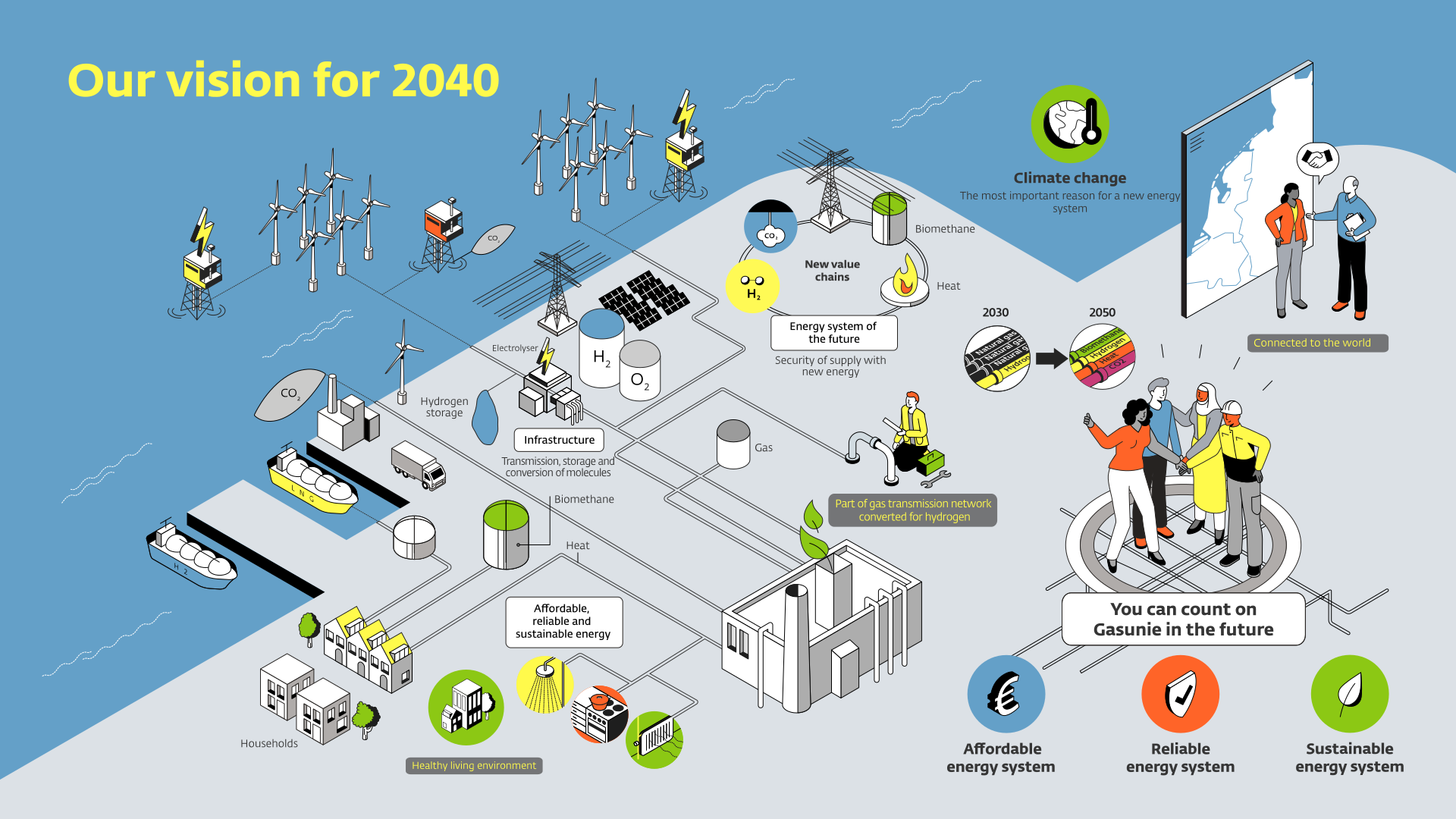
By 2040, Gasunie will be operating in four value chains:
- Methane: By 2040, our network, terminals and storage facilities will accommodate methane, biomethane, bio-LNG, LNG and e-methane. Society will be using less natural gas than today. CCS will play a key role and, together with the use of biomethane, will even deliver negative emissions;
- Hydrogen: By 2040, the Netherlands will be a prominent hydrogen hub in north-western Europe. Gasunie will by then have a large network in the Netherlands and Germany, storage options in salt caverns and import terminals in the ports of Rotterdam and Eemshaven;
- CO2: Together with several partners, Gasunie will be operating CO2 transport and storage infrastructure, including import and export terminals, which we will use to enable industry to decarbonise and emissions to be reversed;
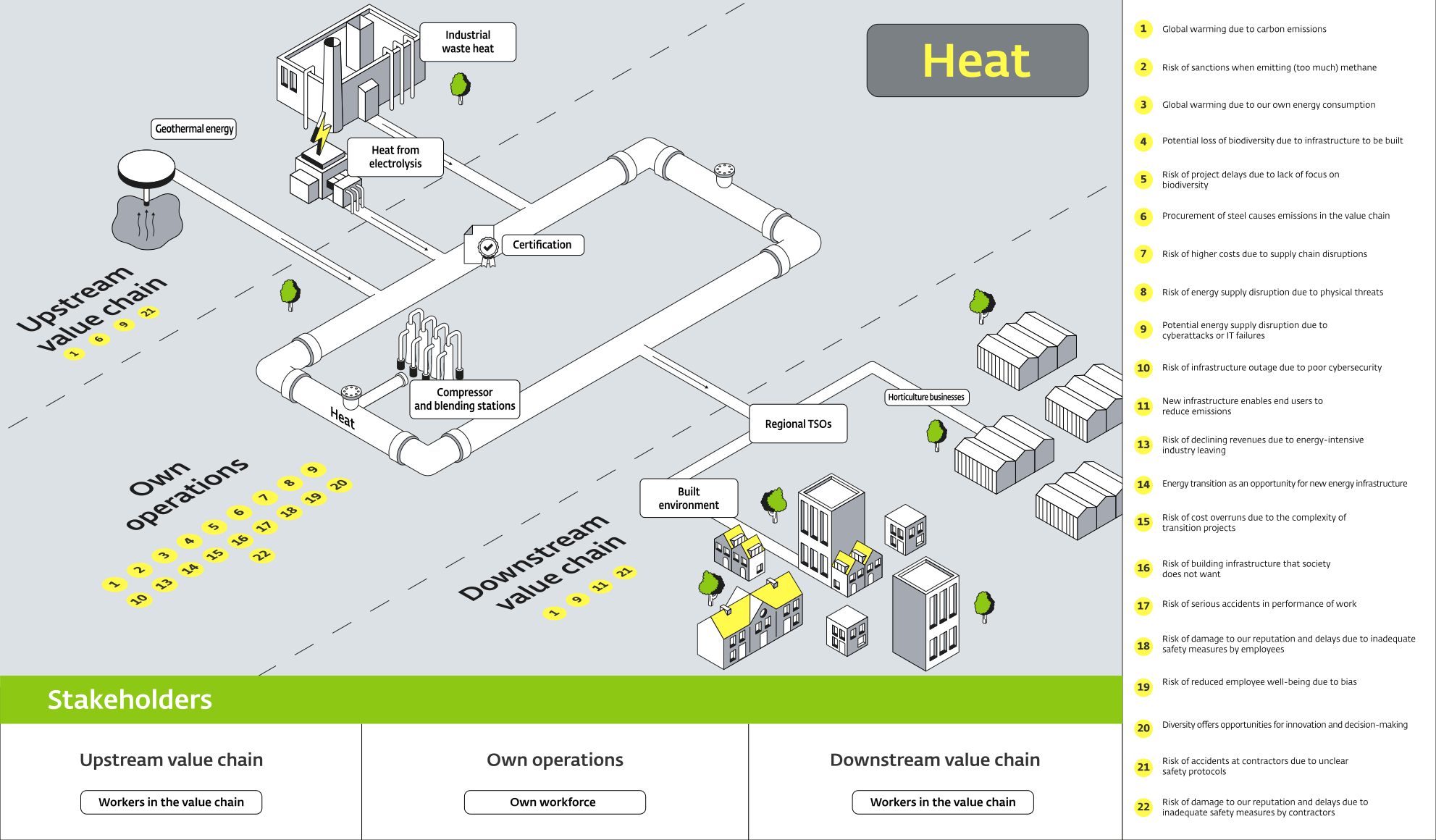
- Heat: By 2040, Gasunie will be operating two to three large-scale heat networks to heat homes and businesses in a sustainable way.
Investment agenda
According to our current estimates, the value of Gasunie’s total net investment2 agenda for the five financial years from 2026 through to 2030 will come in at around € 10.5 billion. Of this amount, roughly three quarters is expected to go to energy transition projects and one quarter to investments in natural gas and LNG infrastructure. Most of these investments will be made over the 2028-2030 period.
2 We will be carrying out a number of projects with partners. The illustration shows only Gasunie’s share of the project expenditures, after deduction of grants received or to be received.
Every year, we re-estimate the extent of our investment agenda, weighing all the factors that will and may influence the development of large capital-intensive infrastructure projects. In 2024, we estimated our net investment agenda for the six financial years from 2025 through to 2030 at around € 12.0 billion, with two thirds earmarked for energy transition projects and one third for investments in natural gas and LNG infrastructure.
For each project we look at tailor-made solutions that will keep the development and operating risks under control. There is a dedicated decision-making process for each project. Major investment decisions are made by the Executive Board and submitted to both the Supervisory Board and the shareholder for approval.
We expect the majority of these projects to be subject to some form of regulation, either immediately or after some time.
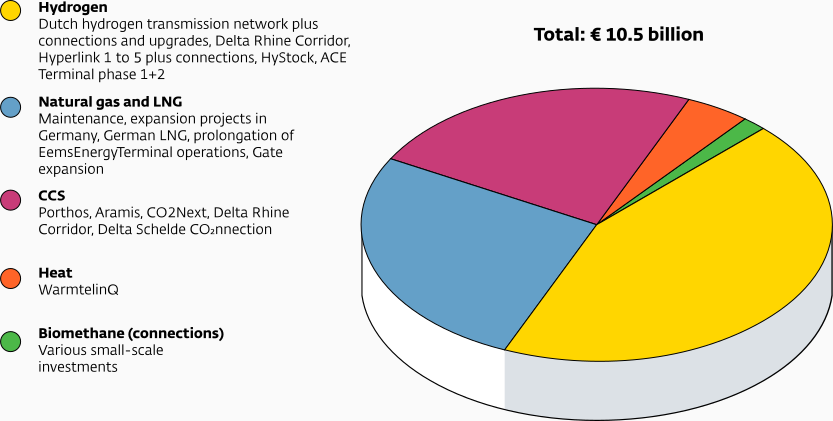
* We want to carry out a number of projects with partners. The chart shows only Gasunie’s share of the expenditures. The investments shown are net of grants.
In the 2025 financial year, we invested a total of over € 600 million in energy transition projects. Part of this amount was invested in Porthos, WarmtelinQ and the Dutch hydrogen transmission network, which are energy transition projects the Netherlands needs for a sustainable future. We also invested heavily in the German Hyperlink project. Additionally, we committed approximately € 600 million to the development and maintenance of gas and LNG infrastructure. Most of the investments for LNG were made in Germany. Our investments in gas and LNG infrastructure will increase the security of energy for households and industry.
We financed most of our investments by raising funds on the capital market. In April 2025, we issued a bond totalling € 750 million. A smaller part of the investments was financed using our available cash flow and grants received. We intend to keep issuing bonds on a regular basis over the coming years. In January 2026, we issued a green bond, also totalling € 750 million.
Social impact
In 2023 and 2024, we used impact-based reporting to prepare our impact report. For this year, however, we have decided not to include an impact report in our annual report. Given that we apply the rules from the Corporate Sustainability Reporting Directive (CSRD), we report our impact in our Sustainability Statement. Gasunie’s social impact is an important factor in our decision-making.